What Is Thermoplastic Paint? The Complete Guide to Types, Application, and Standards
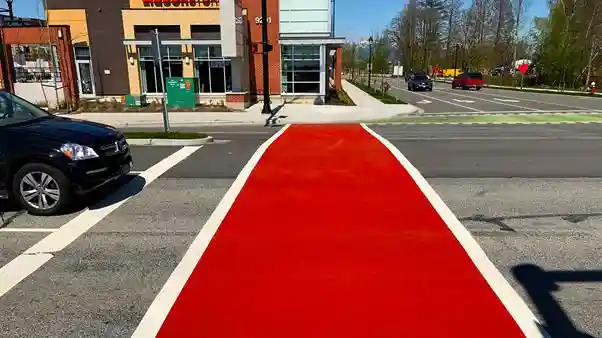
Thermoplastic paint is one of the most durable and effective materials for marking roads, streets, and parking lots. Thanks to its long lifespan, excellent nighttime reflectivity, and outstanding resistance to abrasion and harsh weather conditions, it has become the gold standard for long-term traffic projects. Composed of a blend of synthetic resins, pigments, glass beads, and fillers, this paint is a smart and cost-effective choice for ensuring safety and order on roadways.
The Main Types of Thermoplastic Paint
Based on their application method and chemical composition, thermoplastic paints are divided into two main categories, each suited for specific use cases.
1. Hot-Melt Thermoplastic Paint
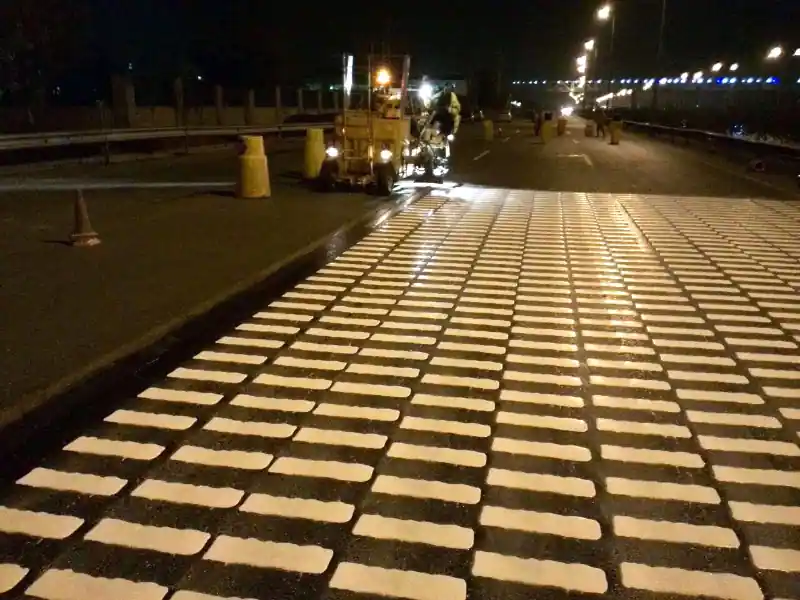
This is the most common form of thermoplastic paint, supplied as a solid powder. For application, this powder must be heated in specialized machinery (preheaters) to a temperature of 180–200°C (356–392°F) until it becomes a uniform liquid. After being applied to the surface, it cools and hardens very quickly.
-
Key Features:
-
Exceptional Durability: Offers a service life of 3 to 6 years, even on high-traffic roads.
-
High Build Thickness: Can be applied at various thicknesses to create raised markings like rumble strips.
-
Superior Reflectivity: Glass beads applied during application provide outstanding nighttime visibility.
-
Ideal For: Highways, major roads, and high-traffic areas
-
2. Cold Plastic Paint
Based on two or three-component acrylic resins, this paint does not require heating. It is mixed with a hardener at ambient temperature and then applied. This makes it ideal for smaller projects, repairs, and locations where using heating equipment is not feasible.
-
Key Features:
-
Fast Curing: Reaches full hardness in 20–40 minutes, depending on the temperature.
-
Excellent Adhesion: Bonds strongly to various surfaces, including asphalt and concrete.
-
High Flexibility: Perfect for marking specific symbols like arrows, handicap logos, and pedestrian crosswalks.
-
Ideal For: Parking lots, local streets, marking repairs, and small-scale projects
-
Comprehensive Comparison: Hot vs. Cold Thermoplastic
How to Apply Thermoplastic Paint: A Professional Guide
Proper application is the key to achieving maximum durability and performance.
Step 1: Surface Preparation (The Most Critical Step)
The road surface must be completely clean, dry, and free of all dust, oil, grease, and moisture. Any contamination will prevent the paint from bonding properly to the asphalt. For concrete surfaces or old, weathered asphalt, applying a specialized primer 3-4 hours before application is mandatory.
Step 2: Applying Hot-Melt Thermoplastic
-
The thermoplastic powder is heated in a preheater to 180–200°C until it is a uniform, molten liquid. (Warning: Exceeding 220°C (428°F) will damage the resin and degrade the paint quality).
-
The molten material is transferred to the marking machine and applied to the surface at the specified thickness.
-
Immediately after the paint is sprayed, standard-compliant glass beads are dropped onto the hot line, allowing them to embed and ensure long-term reflectivity.
Step 3: Applying Cold Plastic
-
The marking area is outlined with masking tape to ensure clean, sharp edges.
-
The paint is thoroughly mixed with its hardener component according to the manufacturer's specified ratio.
-
The mixture is applied at a thickness of 0.8–2.2 mm using a trowel, roller, or specialized spray equipment.
-
The minimum ambient temperature for application should be 10°C (50°F).
Why Thermoplastic Paint is the Best Choice
-
Unmatched Durability & Longevity: Its resistance to heavy traffic, snow, rain, and UV radiation drastically reduces maintenance and re-striping costs.
-
Nighttime Safety: High reflectivity from the embedded glass beads significantly improves driver visibility at night and in adverse weather conditions.
-
Eco-Friendly: Modern formulations are free of harmful solvents and have minimal environmental impact.
-
Fast Drying: Minimizes road closure times and allows traffic to resume quickly.
Purchase Quality-Assured Thermoplastic Paint from Araz Shimi
The quality of raw materials is the key difference between a standard road marking and a failed one. At Araz Shimi, we rely on cutting-edge technical knowledge and the finest raw materials to produce thermoplastic paint that complies with all national and international standards.
With a proven track record of over 150 successful projects across Iran, we guarantee that our products deliver safety, durability, and clarity to the nation's roads. For expert consultation, price inquiries, or to place an order, contact our specialists today.